
Maternal Age in the Middle Ages
An Online Exhibit/Presentation
When did mothers give birth during the medieval period?
This project explores this question using data from four regions: the areas that are now France, The Netherlands, Belgium and the UK.
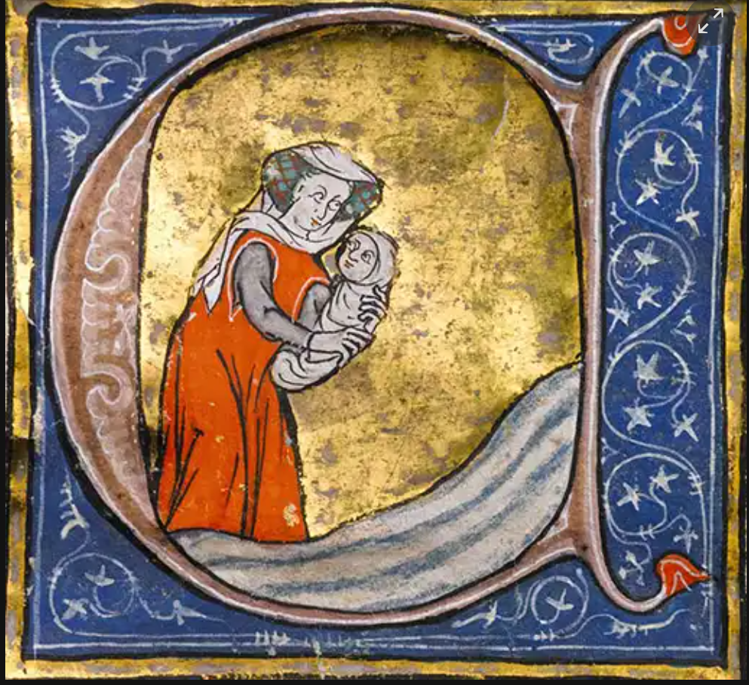
Medieval Marriage Ages
Recent research has indicated that medieval women married much later than was once assumed. This calls for a re-evaluation of the age at which medieval women gave birth.
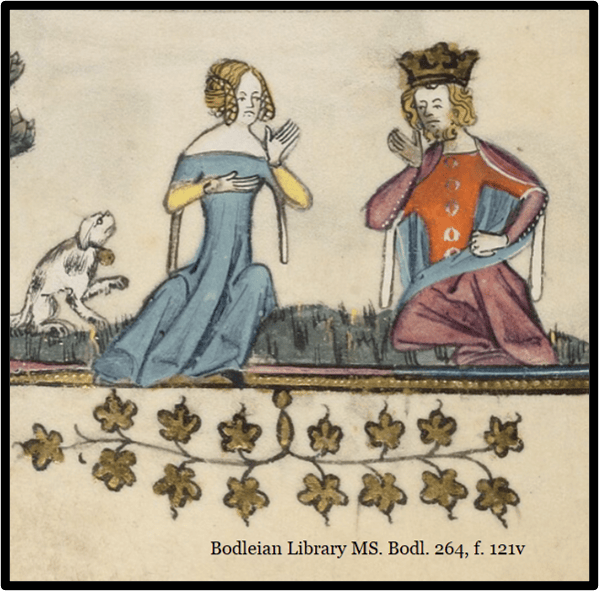
Challenges of Identifying Medieval Maternal Ages
Unfortunately, identifying the age of mothers in medieval Northwestern Europe is a challenge because ages were not commonly recorded. Baptisms, for example, were not recorded in any large-scale way in Northwestern Europe until the sixteenth century.
One useful source for approaching this question is the 1185 Rotuli de dominabus et pueris et puellis. This was a detailed list of the estates of widows and orphans who were living in Crown-controlled estates in medieval England.
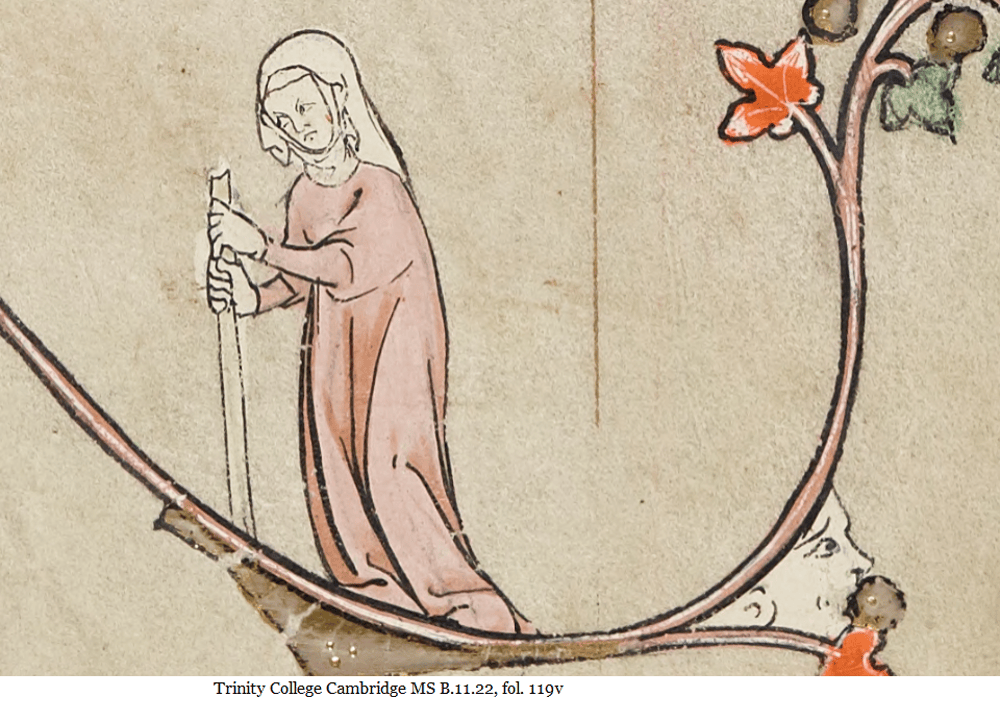
Maternal Ages on the Rotuli
By looking at the ages of mothers and their children on the Rotuli, we can gather information about the average age at which these women gave birth.
As I show in a forthcoming article, the average age of mothers at the birth of a first child listed on the Rotuli is around 23.
This is comparable to the average maternal age at first birth in the West at some points in the twentieth century, and it raises the question of whether medieval maternal ages were so different from modern ones.
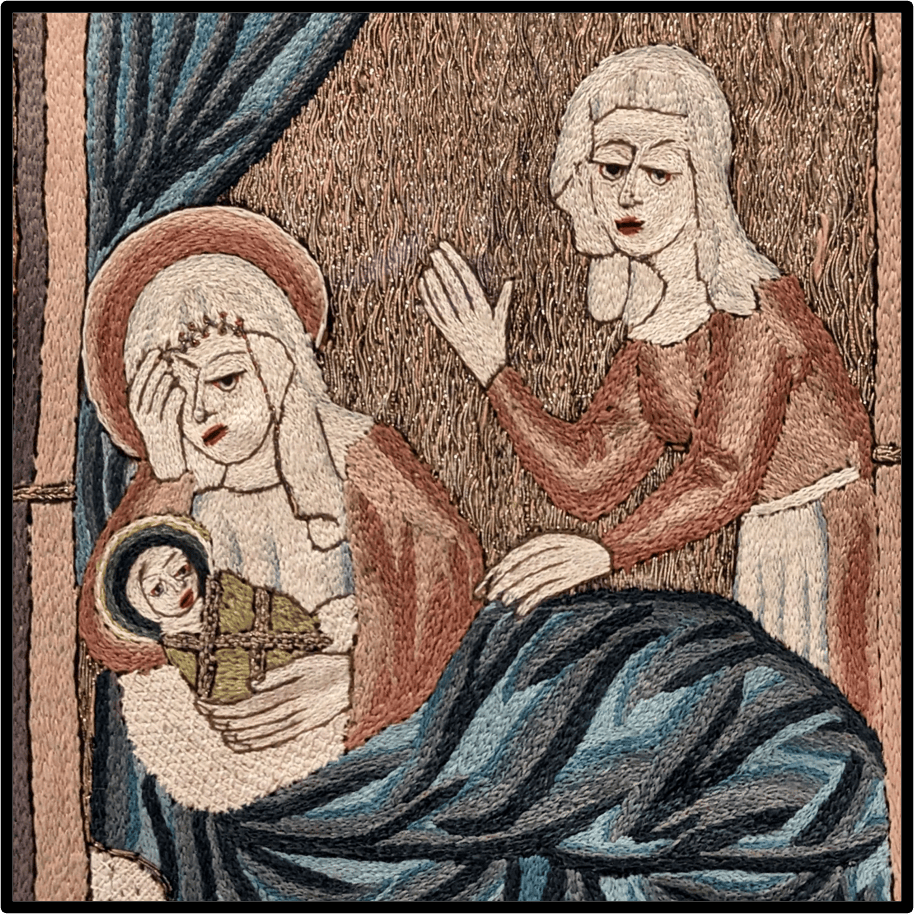
Detail from a fifteenth-century embroidered tunicle depicting the Virgin Mary with Christ; Glasgow Museums, ID no. 29.2. Creative Commons License (https://creativecommons.org/licenses/by-nc/4.0/).
Age at Birth of Subsequent Children
Aside from age at first birth, the Rotuli records give valuable information about the ages at which women gave birth to subsequent children.
For example, the Rotuli records indicate that the wife of Peter de Peleville had 4 children; one when she was 23, one when she was 33, one when she was 41, and her last child when she was 45.
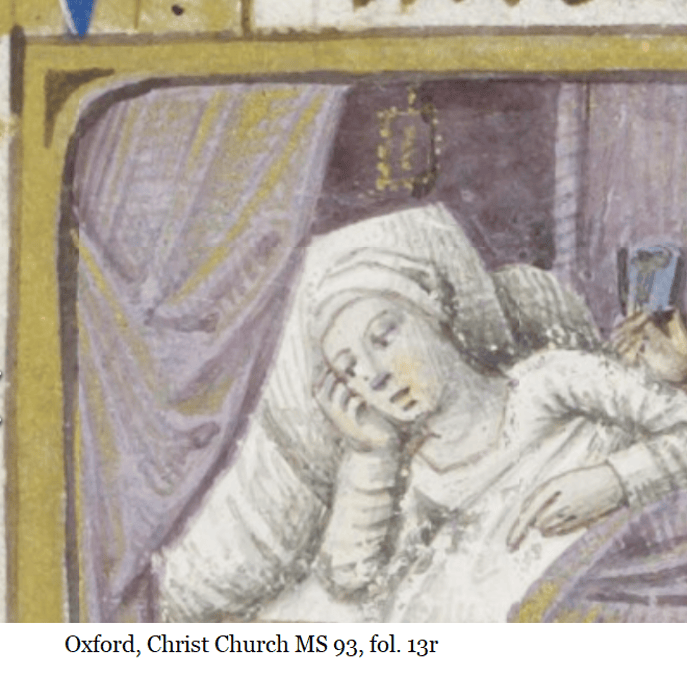
The Rotuli records contain many examples of women who continued to have children in their late 30s or 40s.
Similar Ages in Other Areas
The Rotuli data pertain to only one general area and one time period. But we find similar data elsewhere, even among the nobility (who we might expect to have felt more pressure to have children to secure political ties).
Among the Countessess of Holland from 1110 to 1580, the average maternal age at first birth (among women whose ages are known) is around 21.
Even among upper-class mothers, then, having a first child when the mother was in her 20s or 30s was common.
Medieval Medical Writings
Many medieval medical texts state that women should wait until adulthood before having a child to promote the health of both mother and baby.
Higher ages than sometimes assumed
Although medieval age data is limited, the age data that does exist for the four regions under investigation in this project suggests that average age of medieval mothers at first birth was higher than is sometimes assumed.
Literary Sources and Maternal Age
The data gathered for this project suggests that maternal ages in the 30s or 40s were not uncommon in the areas under investigation. But how were older maternal ages represented in medieval literature from these areas?
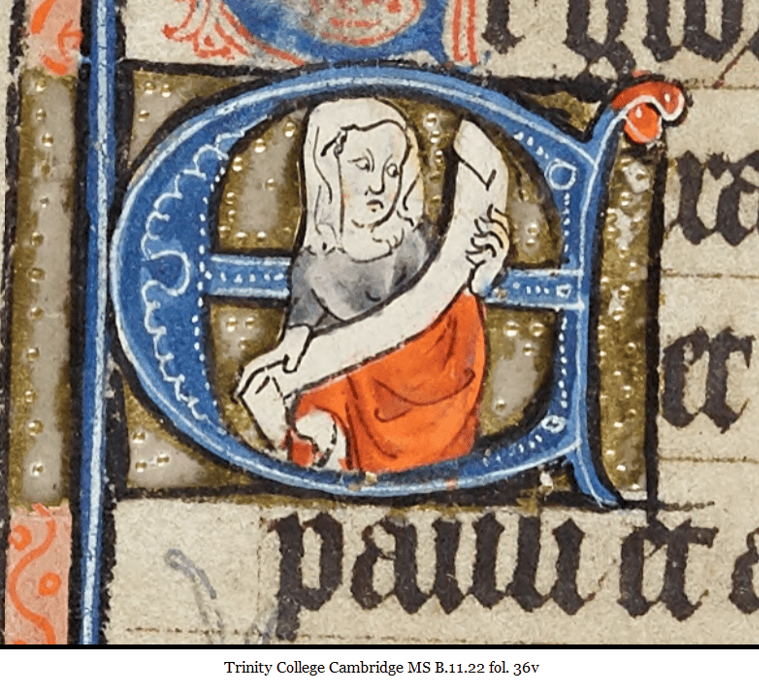
Unfortunately, few literary sources from these areas mention maternal age. Yet I have explored this question by turning to Middle English retellings of the biblical stories pertaining to Sarah and Elizabeth (both of these women are described in the Bible as being at an advanced age, and as not being able to conceive without intervention from God.
As I have argued, the Middle English retellings of these stories point to a wide range of different attitudes toward maternal age during the period in which they were written.
Further Reading
Learn more about the MAMA: Maternal Age in the Middle Ages Project here. The datasets are archived in the DANS SSH repository.
Sources of the data are indicated in the datasets; for the Countesses of Holland data, most dates are drawn from D.E.H. de Boer and E.H.P. Cordfunke, Graven van Holland: Portretten in Woord en Beeld (Walburg Pers, 1995). For the Rotuli data, most is drawn from the Rotuli de dominabus et pueris et puellis de donatione regis in XII comitatibus, ed. Stacey Grimaldi (London: G. Pickering, 1830). The scope and data compilation process for this data, and more detail about some of the findings presented here, are outlined in Krista A. Milne, “New Insights into Medieval Maternal Age,” Digital Philology, vol. 16.1 (forthcoming 2027).
Credits
This post/online exhibit page was created by Dr. Krista A. Milne, the PI of MAMA: Maternal Age in the Middle Ages, funded by a Dutch Research Council SSH Open Competition XS 2025 grant (file no. 406.XS.25.02.131).

