
Graduate Course Teaching
Postdoctoral, PhD, MA and BA Supervision
Teaching Positions and Qualifications
Teaching Grants, Awards and Nominations
Digital Humanities Workshops
Teaching Projects and DH Teaching Tools Developed
Graduate Course Teaching
Graduate Course Teaching 2022-2026
Reading Medieval Women: Literacy and Writing Women in Medieval France and England
The Epic Course: A Pre-Modern Genre in the Modern Digital Realm (interdisciplinary MA course co-taught with 5 colleagues)
Graduate Course Teaching 2021-2022
La Querelle des Femmes: Gender and Textual Revolution in Medieval England and France
The Epic Course: A Pre-Modern Genre in the Modern Digital Realm (interdisciplinary MA course co-taught with 4 colleagues)
Graduate Course Teaching 2020-2021
La Querelle des Femmes: Gender and Textual Revolution in Medieval England and France
The Epic Course: A Pre-Modern Genre in the Modern Digital Realm (interdisciplinary MA course co-taught with 4 colleagues)
Graduate Course Teaching 2019-2020
Long-Distance Romance: la transmission du roman courtois médiéval [with Comenius Fellowship Editing Project]
Graduate Course Teaching 2018-2019
Long-Distance Romance: la transmission du roman courtois médiéval
Graduate Course Teaching 2017-2018
Editing Medieval English Texts: The Leiden Lydgate Project
Long-Distance Romance: la transmission du roman courtois médiéval
State of the Art II: King Arthur, a medieval legend at the borders of English literature
Postdoctoral, PhD and Thesis Supervision
Current PhD Supervision
J. Greenland
(starting in Sept. 2026) PhD supervision funded by my Dutch Research Council (NWO) Vidi Grant (€850 000) for “DISMANTLE: Disability and Mobility aids in Northwestern-European Textual, Literary and Artistic Evidence, 1100-1500”
Other: Internal Reader/Examiner for the PhD defense of Julie Anne Somers’ dissertation, “Women and the Written Word: Textual Culture in Court and Convent During the Twelfth-Century Renaissance.”
I also have experience with postdoctoral supervision (post-doctoral position funded by my NWO Open Competition SSH-XS grant; project concluded in 2025).
MA Theses Supervised
Rixhon, C. “Flores mulierum” (French track thesis). 2025.
Pereira, J. “Quen þis Bretayn watӡ bigged” – Elements of Medieval Proto-Nationalism in The Song of Lewes, “The Agincourt Carol”, and Sir Gawain and The Green Knight.” 2025.
Grundeken, K. “Knights in Shining Armor: Representations of Medieval Chivalry in the films Star Wars and Pretty Woman.” 2022.
Whitney, Rhianne. “Undressing Medieval Bodies: Exploring Sin, Shame and Sexuality through Representations of Nudity and Nakedness in the Middle Ages.” 2021.
Port, Nicolas. “The Immortality of King Arthur The Representation of Arthurian Legends in Contemporary Japanese and American Pop Culture.” 2021.
Remmelzwaal, Dionne. “‘Ne ænig hleomæga feassceaftig ferð frefran meahte’: Old English Elegiac Elements in Breton Lays from Medieval England.” 2021.
Kigma, Simone. “’Ther fell a wondyr cas / Of a ley that was ysette’: Social Critique Enacted by Fairies in the Breton Lays of Lanval, Graelent, Guingamor and Sir Launfal.” 2021.
Bossenbroek, Berber. “Of Gloves, Girdles, and Gilded Combs: Love Tokens and the Representation of Gender and Sexuality in Medieval French and English Romances.” [Research MA] 2021.
de Ruijter, Juul.”But Was He Really Gay? An Analysis of Modern Responses to Medieval Sexuality and Desire.” 2021.
van Nierop, Cindy. “Botanical Representations in Middle English Romance.” 2021.
van Keulen, M. “‘Whereof Bretouns maked her layes’: Audience Expectations and the Middle English Breton Lays.” 2020.
Kluver, Aylin. “Poetic Expressions of Depression: Depictions of Depression in the Poetry of Thomas Hoccleve and Christopher Smart.” 2020.
van Os, G. L. “Queen Arthur, Queer Arthur: Reading the Queer Tradition in Modern Adaptations of Arthuriana.” [Research MA] 2020. [Paper presented at Leeds International Medieval Congress 2019 in session 651, “A Modern Approach for Medieval Times: Queer and Gender Studies as a Tool to Explore Middle English Literature”]
Bierman, Manon. “’For i this wildernesse beoth uvele beastes monie’: A Comparison Between Medieval Bestiaries and the Beasts of Sin Section of Ancrene Wisse.” 2020. [Paper accepted at the Canadian Society of Medievalists Congress 2020 but cancelled due to COVID-19]
Hirsh, Cindy. “‘The False Knight’? The Tension Between Historical And Literary Representations Of Chivalry In France and England, C. 1100-1500.” 2020.
Donk, Annefleur. “‘Je n’en connus aucun digne de mon estime, à part celui-ci’: The Depiction of Sir Lancelot in Chrétien de Troyes’ The Knight of the Cart and Thomas Malory’s Le Morte d’Arthur.” 2020.
Reekers, Calum. “ ‘WHEN GOD IT SO DESIRES’: A Critical Edition, Translation and Analysis of the Wills of Richard Beauchamp and Sir Humphrey Starkey” Double thesis in translation and literary studies, co-supervised with Tony Foster [Leiden Translation]. 2019.
Jansen, Jennifer. “Monsters in the Sir Gawain Cycle: Reflections of Tensions Surrounding Aristocratic Identity in the Fifteenth-Century Anglo-Scottish Borderlands.” [Research MA] 2019.
Tousain, Simone. “Christine de Pizan’s Fortification in The Book of the City of Ladies.” 2019.
Zwart, Dorien. “Gay Knights and Gay Rights: Homosexuality in the Late Middle Ages and its Presence in Arthurian Literature.” 2019. [Paper presented at Leeds International Medieval Congress 2019 in session 651, “A Modern Approach for Medieval Times: Queer and Gender Studies as a Tool to Explore Middle English Literature”]
De Witte, Daan. “Built on a True Dream: The Medieval Church and its Representation in Ken Follett’s The Pillars of the Earth.” 2018. [Featured on medievalists.net]
Officier, Skye. “Fear or Fascination? Representations of the Wild Man in Middle English Literature.” 2017.
Miesen, Alexander. “No Wycliffe and The Seven Deadly Sins: An Edition of a Treatise on the Seven Deadly Sins in Princeton University, Garrett MS 143 fols. 21v – 26v.” 2017.
BA Theses Supervised
A Political Legacy: The Political Origins of Once Upon a Time’s King Arthur.” 2025.
“From Margin to Meaning: Queer and BIPOC Presence in Anne with an “E” as a Mirror of Modern Values.” 2025.
“Tradition and Disruption: Analyzing Medieval Ideology in A Knight’s Tale.” 2025.
“More Than Words on a Page: A New Visual Representation of Old English Poetry Based on Manuscript Formatting and Historical Performance.” 2025.
“Back To Your Roo: Tracing the Anglo-Saxon and Old Norse Origins of the Nord Cultural Identity in Skyrim.” 2025.
“Rod is Min Nama: Exploring the Agency of the Cross in The Dream of the Rood.” 2024.
“The Holy Hebrew Heroine: The Heavenly Heroics of Judith in her Self-Titled Poem.” 2024.
“How Did the theme of Courtly Love and its Traits Develop in Arthurian Literature throughout the Twelfth and Thirteenth Centuries?” 2024.
“A Beowulf for every Age: A Comparative Analysis Between Seamus Heaney’s and Maria Dahvana Headley’s Translations of Beowulf.” 2024.
“Katharina and Titania: From Dominant Women to Subservient Wives.” 2024.
““Ne ænig hleomæga feassceaftig ferð frefran meahte”: Old English Elegiac Elements in Breton Lays from Medieval England.” 2021.
“Same-Sex Love and Desire in Middle English Literature: Lanval and Sir Gawain and the Green Knight in Context.” 2020.
“Corsed worth cowarddyse and couetyse boþe”: How Speech and Silence Reflect Fourteenth-Century Identity Conflicts in Sir Gawain and the Green Knight. 2020.
“It Is Chivalry Which Makes A True Knight”: The Representation of Chivalric Ideals in George R. R. Martin’s A Song of Ice and Fire. 2020.
“Orfeo Looking Back: Homeric Themes in the Middle English Sir Orfeo.” 2020.
“The Medieval Evolution of a Supernatural Woman: An Exploration of Morgan’s Origins and her Depiction in Three Key Arthurian Works.” 2020.
“Can Women Be Monsters? An Onomastic and Feminist Approach to Grendel’s Mother’s Namelessness.” 2019.
“Warrior Women in the Beowulf Manuscript: A Comparison of Judith and Grendel’s Mother.” 2019.
“The Sexuality of the Three States: Women’s Sexuality in Thirteenth-Century English Texts.” 2018.
“Building Narrative: Architectural Representation in the Works of Geoffrey Chaucer.” 2018.
“Transnational Transference of Textual Knowledge in Early Sixteenth Century Vernacular Print Culture.” 2018.
“Audience or Author? The Development of Chaucer Editing from the Sixteenth Until the Nineteenth Century.” 2018.
“Changing Perspectives: the Evolution of Arthurian Characters.” 2018.
“‘Life is not a song, sweetling’: Feminism and Subversion of Medievalist Fantasy.” 2018.
“Stylistics, Gender, and Genre in ‘The Miller’s Tale’.” 2018.
“Dating the Old English Exodus: Comparing Deviations from the Biblical Account to Ideas on Church Practices, Volition and Grace, and Women’s Place in Society from the Eighth and Tenth Centuries.” 2017.
“Depictions of God in the Old English Exodus and Judith.” 2017.
“Women in Medieval Fantasy Literature: Gender and Knighthood in George R.R. Martin’s A Clash of Kings.” 2017.
“Spiritual Spouse or Homely Mother: Affective Piety in The Book of Margery Kempe and Revelations of Divine Love.” 2017.
In general, I’m willing to supervise theses on Old and Middle English language and literature and medieval French literature. I can also supervise BA theses on French and English Canadian literature.
Within these areas, my supervision strengths include digital humanities approaches (including online projects, algorithmic criticism, TEI-based editions, and other digital approaches); women’s literature; Chaucer’s Canterbury Tales; medieval romance; multilingualism in medieval England; book history and manuscript studies; medieval reading communities; literary theory approaches to medieval literature; and the theory and practice of scholarly editing (including digital editions).
If you have an idea for a thesis or dissertation project that falls within or beyond the scope of these topics, feel free to contact me to discuss it. Prospective PhD candidates can get more information about doing a PhD at Leiden University here.
Teaching Positions and Qualifications
Leiden University
2016-present
Universitair docent (full-time permanent/tenured-equivalent post, since 2018) of Medieval English Literature (and, since 2018, of medieval French Literature)
- 2022 Senior Teaching Qualification
- 2017 Basic Teaching Qualification
University of Ottawa
2013-2016
Part-Time Professor (‘Instructor of Record’/Lecturer equivalent)
2011-2014
Tutorial leader (Docent-4 equivalent) (and 2010-2011 corrector; teaching support role)
Teaching Grants, Honours, and Nominations
2020 [(with Bram Caers, Emma Grootveld, Alisa van de Haar and Johannes Müller, Leiden University)] Leiden University Language Education Grant (€10 000) awarded for the development of “The Epic Course: A Pre-Modern Genre in the Modern Digital Realm,” a cross-disciplinary digital project-based MA course
2019 NWO Comenius Teaching Fellowship (€50 000 EUR)
2019 Appointed to KNAW’s Comenius Teaching Network (tied to, and in recognition of, my 2019 Comenius Grant)
2019 Leiden University Expertise Center for Online Learning (ECOLe) Blended Learning Grant (€5 000) awarded to develop a Middle English web resource, “The Interactive Middle English Site (TIMES)”
2019 [with Alisa van de Haar, Leiden] Humanities Faculty Research Traineeship Grant for “ ‘Pour aprendre romain’: Learning French Outside of France, 1250-1600”
2019 Leiden Education Prize Nomination (not awarded)
2018 Leiden Teaching Prize for the Humanities Nomination [shortlist]
2017 [with Thijs Porck] ECOLe Blended Learning Grant awarded to develop an Old English Learning App
2016 [with Thijs Porck and Erik Kwakkel] Humanities Faculty Grant (€17 000) awarded for the development of “Leiden University Medieval Texts Online,” a platform designed to host students’ digital medieval projects
Further information about these grants can be found under ‘Publications and Awards‘.
Digital Humanities Workshops Led
2022 “An Introduction to Creating Sustainable and Dynamic Scholarly Editions with TEI Markup”, Summer School for Literary Studies & Digital Humanities 20-23 June, 2022 [online workshop]
2021 “An Introduction to Creating Sustainable and Dynamic Scholarly Editions with TEI Markup”, Summer School for Literary Studies & Digital Humanities 1-4 June, 2021 [online workshop due to Covid-19]
Teaching Projects and DH Teaching Tools Developed
The Epic Course: A Pre-Modern Genre and its Digital Disclosure ( collaboratively taught with 4 other colleagues; 2021-2026)
An interdisciplinary medieval editing and digital tool-based course funded by a collaborative Leiden University Language Education Grant (€10 000; award to a team including me and four colleagues)
“The Open Medieval Editions by Students Project (TOMES)” (2019-2020)
As part of my NRO/NWO Comenius project, I taught students in my BA and MA courses web writing, medieval literary analysis and textual editing skills (and some basic XML-based web markup) and students used these tools to create their own editions of medieval texts. These editions, after careful editing, have been transformed into an open access anthology of Middle English literature designed for the undergraduate classroom, which I use in some of my classes (and which others have used in their teaching as well).
“The Interactive Middle English Site (TIMES)” (2019)
As part of my Leiden University Expertise Center for Online Learning (ECOLe) Blended Learning Grant I led a project that developed a Middle English web resource, “The Interactive Middle English Site” (TIMES). I use this interactive site in my teaching to support students who need extra help with Middle English.
The 2019 Medieval English Translatathon
In order to raise money for cancer research and give students more experience working with Old and Middle English, I organized a “translatathon“; student volunteers translated short custom holiday greetings into Old and Middle English for small donations. Thanks to the generosity of the public and the dedication of the student volunteers, we exceeded our fundraising goal and raised over 600 eur for cancer research. We plan to make this an annual event, donating the money to a new cause each year.
Editions of Middle English Lyrics
Students in my third-year Middle English seminar create their own editions and translations of Middle English lyrics. These are then included on the syllabus for the next year’s class.
Middle English Seminar Edition 2019
“Wose wartt wid pritte abeit amadde,” “Liuis firist & licames hele,” and “Le fiz marie, cil ke tut le munde fist”
Introduction, edition, and translation by Marijn, Berber Bossenbroek, Annefleur Donk, Bregje Duinhof, Simone, Maria, Julia Roos, Leontine, Gessica Sastrosoedjono, Renee, and Rob
Middle English Seminar Edition 2018
“Whoso seeth on rood,” “Thou that madest all thing,”“Now thou unseely body,” and “Abel was loosed in trueness”
Introduction, edition, and translation by Jitse Brouwer, Eline den Dunnen, Charlotte Gerrits, Caroline Koppelaar, Chiara Marchetti, Francesco Romano, Robin Schilp, Simone Tousain, Wouter Woltering, Jurgen van Vlimmeren and Monique van der Wal
Middle English Seminar Edition 2017
“Ful Feir Flour” and “Penaunce is in herte”
Introduction, edition, and translation by Caroline Koppelaar, Anne Irene Vos, Laura Spierings, Giotto Hak, Niké van Duijkeren, Hedwig van Zon, Catelijn van Doorn, Jennifer Jansen, Elise Klom, Iris Roozendaal, Jasper van de Velde, Dorien Zwart
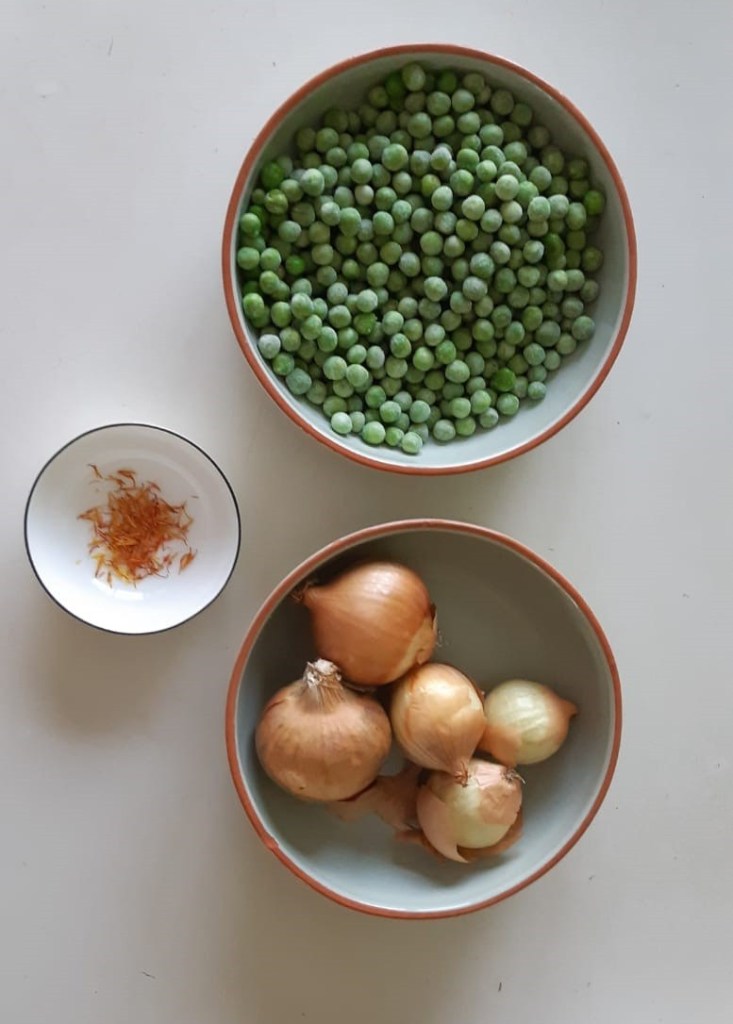
A Medieval Feast
Students in my second-year Middle English class prepared their own medieval feast using recipes they translated out of Middle English.


An Online Module for Teaching Manuscript Transcription
I designed an online module for teaching manuscript transcription to Leiden MA students. Details about the module, and the process of creating it, can be found in this guest post on “Teaching the Codex: Pedagogical Approaches to Palaeography and Codicology.”
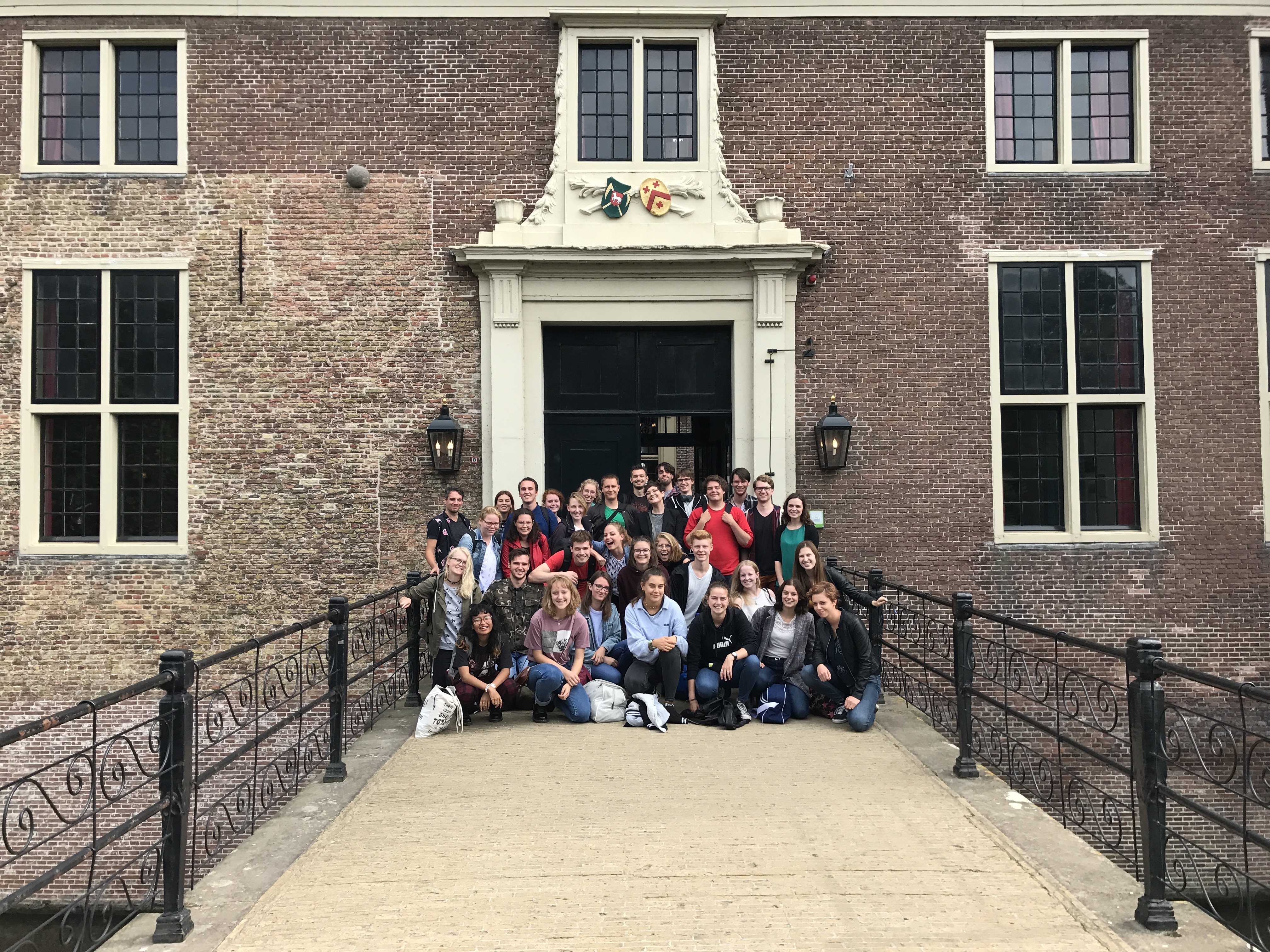
Lecturing in a Medieval Castle
With the aim of enriching students’ understanding of medieval culture, I suggested and helped organize an English department trip to a medieval castle, where I and two colleagues gave a series of lectures on pre-modern literature.
Les ressources pour l’enseignement de la littérature française du Moyen Âge
Les étudiants de première année dans mon cours « littérature française du Moyen Âge » ont créé leurs propres ressources pour l’enseignement des ouvrages médiévaux.

